
This dialogue is a continuation of the previous one.
(Previous topic: “Stop Being a Victim and Reclaim Your Power”)
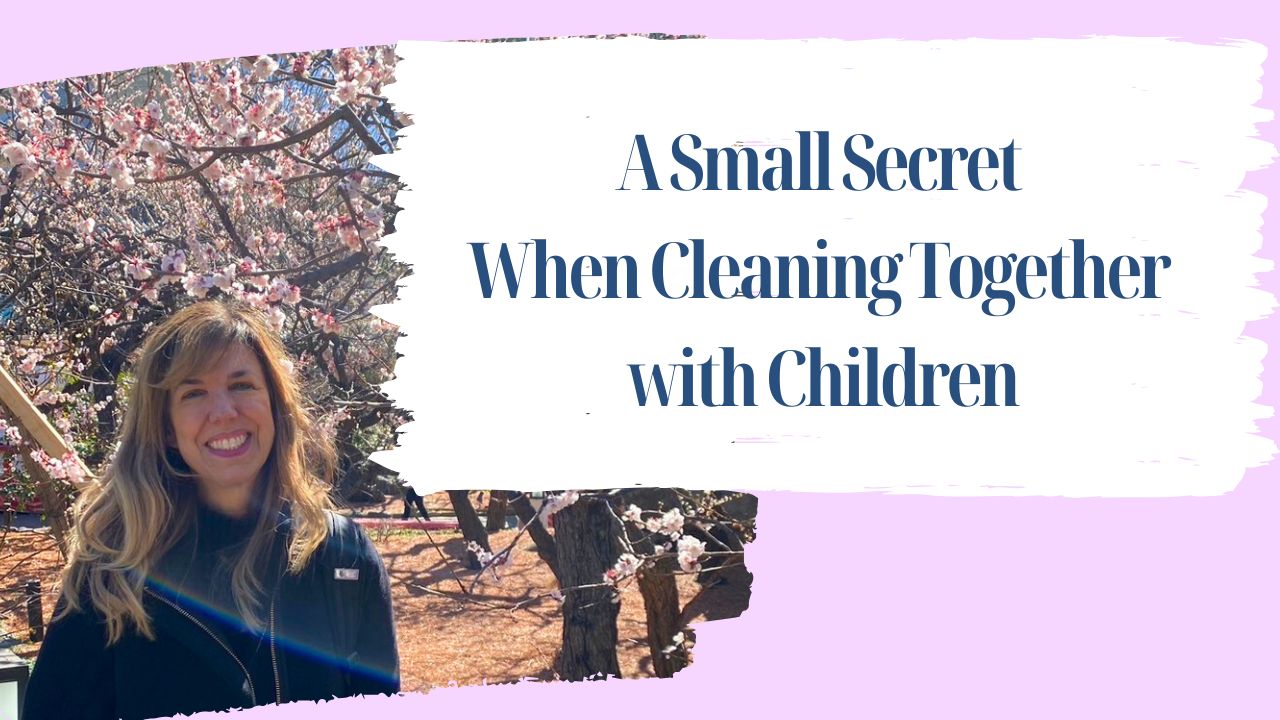
Christine shared how she practices cleaning in every aspect of daily life, and she also taught us a special way of cleaning together with children.
<How do you practice cleaning throughout the day?>
── Next, I’d like to ask you about this.
Your work as an accountant in the construction industry feels like a very logical profession. On the other hand, Ho’oponopono is a spiritual method.
I love emotional and spiritual things, but I’m not very good at logical matters. When something becomes too theoretical, it feels as if my thoughts collide in my head, and I get overwhelmed.
That’s why I’m very curious. How do you, Christine, balance reason and intuition?
That’s a wonderful question. I’ve never been asked that before. I think I can share a little about how I clean throughout the day.
When I wake up in the morning, the first thing I do is read the “12 Step Process” of Ho’oponopono.
During work, I clean the emails I send and receive, the data I touch, my schedule for the day, the people I meet, and even their names. Doing this helps me return to a state of peace.
At the level of consciousness, I think, “I’m going to work,” but in truth, I understand that the real reason I’m there is because I’m being given an opportunity to let go of memories within me.
Each time, I clean as if this is the last time I will ever need to clean that memory—memories related to money, people, documents, and spreadsheets.
Sometimes I become too serious and overthink things. When that happens, I need to take a break. I drink water, do the HA breathing, or do something else so that I don’t take my thoughts too heavily.
I’m someone who gets stressed easily. It happens often. But in any moment, I can choose a tool to clean whatever is happening.
Many things happen in everyone’s life.
Behind each event, an enormous amount of information is unfolding, but our consciousness can perceive only a tiny fraction of it. That means we cannot truly know what is really happening.
By cleaning, we no longer have to experience the scenarios that past memories would otherwise keep replaying for us.
So please clean without expectations.
What we are meant to do is to ask ourselves, in this very moment:
“How do I feel right now?”
“What is inspiration guiding me to do right now?”
It might be saying, “Why don’t you go for a walk now?”
We always come back to this one point: caring for ourselves and honoring ourselves. This is the most important thing.
In Ho’oponopono, we say that we were created in the same image as love, in the same image as Divinity.
Originally, we were one with love. Then we lost our way, and Ho’oponopono is the process of returning to that love.
When we practice, we sometimes only touch the surface. We read a bit of the manual, try a little, then stop. We take fragments from different places and try them, wondering, “Will this work?”
But in that way, the essence of Ho’oponopono does not open.
There is a deeper question.
Why are we so afraid of love?
Ho’oponopono brings us back to love, because love is what truly matters. Inner peace is what truly matters.
And what is beautiful is that when we ourselves are love and peace, the outer world is healed as well.
Homes, towns, even the land itself—all are healed.
We want to solve the problems in our lives, and we want to care for our families and the people around us. That’s natural. But all of that begins with caring for ourselves first, with loving ourselves.
It may sound a little selfish. But when the inside is filled with love, everything on the outside naturally returns to where it belongs.

<Do Not Keep Asking “Why?”>
── Thank you for sharing.
I was thinking about this earlier as well.
If our true essence is love, and if we are seeking love, then why are we afraid of it?
Why do we hesitate to open our hearts, to accept others, and to love them?
I wondered…
Perhaps it is because memories of being hurt by love in the past remain heavy within us.
Whenever we feel fear, it is always the replaying of memories.
Even though it doesn’t feel good to be afraid, for some reason we still end up following that fear.
The sooner we realize that “this is just a replay of memories” and choose cleaning, the sooner we can let it go.
We carry memories that span many generations—memories of our families, relatives, and ancestors.
There is no way for us to know where a particular memory came from.
But we do know how to release those memories.
In truth, we cannot know why love is frightening, why we run away from love, or why we feel fear.
There is only one thing we can know.
Do we follow the voice of those memories, block the path toward love, and stop moving forward?
Or do we pause for a moment, stop following the replay of memories, use a cleaning tool, and say to what is happening right now:
“Thank you for showing up. Thank you for giving me an opportunity to let go.”
<How Do We Clean a Child’s “Internet Addiction”?>
── Thank you so much. This has been incredibly helpful.
This is my final question. You have your work, and you also have three children. I have two children myself. For many women, children’s education is one of their greatest concerns.
I often hear from many participants that their children dislike studying. As mothers, when we see our children not studying, giving up easily, or spending all their time on games, we become anxious. I feel that way too.
Children today love games, and it seems hard for them to stay away from electronic devices. The temptation is very strong. They want to finish their homework quickly so they can play more games.
In moments like that, how should we clean?
Thank you. Children truly are beautiful gifts to us. They give us countless opportunities for cleaning, one after another.
In Ho’oponopono, we say that what we clean is not the child’s appearance itself, but what we are experiencing through the child. In other words, what we are cleaning is our own experience.
For example, when I feel that my child is not studying enough, or that they are playing too many games, all of this is my own experience of feeling that way.
Thoughts such as “They should study more” or “They should play fewer games” are all beliefs within me.
When I clean those thoughts and let them go, I notice that unexpected things begin to happen.
For example, my child may stop playing games on their own, or achieve very good results on an exam. These things happen beyond all of my expectations.
Of course, growing children do need certain boundaries.
But before telling a child “this is okay” or “this is not okay,” I first clean myself. By doing so, I can speak from love, and my inner state becomes aligned.
Because there is only one question that truly matters.
When we speak to our children, are we speaking from love, or are we speaking from memory?
── Yes… in many cases, we are speaking from memory. We want our children to listen to us and to do what we think is best.
But children are very intelligent, and they don’t simply accept what their parents say.
That’s why it’s important for parents to take responsibility and clean their own experiences and beliefs.
Actually, there is a small secret I use when I’m with my children.
It’s speaking to them after they have fallen asleep.
In my heart, I speak to them like this:
“I love you. Thank you for being my child.”
Then, as I reflect on the interactions I had with them that day, I clean. If there were moments when my words were not appropriate, I say,
“I’m sorry. I love you.”
A child’s subconscious can receive these messages.
In that moment, while they are sleeping, when you say “I love you,” the child can hear it.
And what matters most of all is love.
Every answer was so beautiful, I was listening with my whole heart.
── That’s wonderful. Thank you so much for sharing that small secret. Every answer was so beautiful, I was listening with my whole heart. Thank you very much.

Class & Lecture News
2026/10/17-18: Korea Basic 1 Class
Learn more & sign up →
2026/10/24-25: Japan Basic 1 Class
Learn more & sign up →Turn inward in a private session
Christine Leimakamae Chu's private session is also available →Continue your cleaning journey
 Christine Leimakamae Chu Interviews
How Do We Let Go of Memories of Being Abandoned or Disliked? 【英】-700x368.jpg) Christine Leimakamae Chu Interviews
Christine Leimakamae Chu InterviewsThe Power of Connection : Nurturing Relationships through Cleaning  Christine Leimakamae Chu Videos
What can I do when someone I love is suffering|Ho’oponopono  Christine Leimakamae Chu Videos
Parenting Gets Lighter — The Habit of Asking “What in Me?”